Friday, September 20, 2013

Advocacy For People With Disabilities

The incident of albino killings in Tanzania in 2011
Albino person being cut her hands


Meaning of advocacy
The term advocacy refers to “speaking for” or “speaking on behalf of” other people, specifically for those people who are denied their rights, the forgotten ones in the human society. The major aim in advocacy activities is to influence the decision making in the society. Other aims are the winning over the hearts and minds of the public, and create the positive understanding about the people with disabilities.

Types of advocacy

Self-Advocacy
This is condition whereby an individual struggles for himself or herself to be recognized. It is when the individual raises to defend the denied rights.

Joint-Advocacy
This is the state when people join hands to defend the rights of their own and/or of other groups. They are in groups. These groups may be of people with disabilities and other groups with non-disabled people that are devoted to advocate for the rights of people with disabilities.

Functions in Advocacy
The functions of advocacy are of three types, these are:
Interpreting
Here there is attachment of meanings to every aspect of spoken word. In each item to advocacy there are mult-meanings and the consequences associated with it. Sets the comparison between the desired and undesired ones. Indeed, in interpreting in the advanced sense is to win the minds and the hearts of the public.
In advocacy we fight against the status quo. This is the situation about changing the existing social conditions. Another aspect dealt within the advocacy for people with disabilities is to fight against the custodians of the system. In every system there are people who want to continue with the existing bad situation. With these fights, we need to win over the hearts of the public and indeed to make sure that the public is on our side-so that it supports us in every stage we advance.

Connecting
Connecting is about establishing networks, penetrating the system. Within the custodians we come to get supporters. The advocacy groups have to establish networks within the experts and aristocrats. Connecting is generally about networking to influence decision making. It is about giving state persons, big business men and women the responsibilities in the advocacy process. Connecting is the weapon to win over the hearts and the minds of the public.

Gluing
Gluing is among the functions in the advocacy movement. This is the act and process of keeping the ranken files together. Putting together different documents about what is jontly decided by the groups. To implement the decisions in groups. Gluing is, indeed, about numbers of people. When the number is big the custodians consider.

Let us come together for advocacy movement!

       "Think Inclusively ~~~ Act Inclusively ~~~ Create an Inclusive Nation"

This Is For Brave Men and Women..., Read it!


To most people, disability looks like an angry and hungry hunting lion. Look, the only brave men and women can attack and touch it. The men and women who are strong enough can open their hidden nature of loving state to share with their disabled partners. I think the present world needs revolutionary people.


Picture source: Notes By Amanda Livingston

Think Inclusively ~~~ Act Inclusively ~~~ Create an Inclusive Nation

The Reasons As to Why You Need Special Education

Special Education and the Inclusive Nation

Introduction
In this paper, among many issues, the concept of disability and its related terms are discussed; the causes and categories of disabilities are analyzed and finally; the Screening tests and the reasons to create an inclusive nation are taken into account.


Albinism disability
Mult-sensory disability-deaf-blind


DEFINITION OF TERMS
Disability
Disability is defined as difficulty in doing something considered normal. Disability has got three ranges in degrees, that is, mild, moderate, severe and profound. There are different types of disabilities such as visual impairment, hearing impairment, cognitive disability or intellectual impairment, speech and language disorder, deaf-blindness, learning disabilities.

Impairment
It is a condition of missing or having defective body part. It is the lack of body limb or an organ that can cause personal limitations to perform certain tasks in daily lives.

Handicap
The social or physical disadvantage created by an existence of disability.  Sometimes handicap can be a result of social attitudes; a person can be physically and mentally fit but due to the belief of the concerned society a person can be led to handicapped conditions.

Isolation
This is the society’s negative attitudes and rejection towards people with disabilities. Isolation ranges in terms of social, economic, political and cultural backgrounds of the particular society.

Special needs
These are the particular needs of a person that require unique attention in provision of services to an individual having disability in relation to special needs. These services go beyond the education to include all facilities that enable a person to survive accordingly.

Special Education
Special education is a broad term that describes the education of students who have hearing impairment, visual impairment, and speech impairment, intellectual, physical, behavioral or emotional disabilities. Special education involves specially designed instruction that is provided at no cost to parents to meet the unique needs of children with a disability.

Inclusive society
This is the type of society which is consisted with different people having different personalities, abilities and relies on the concept of human diversities. And these people cooperate in all matters regardless of their existing varieties of diversities.

Causes of Disability
Disability, as it is defined as strangely way of doing things considered normal under the influence of impairment, is fundamentally caused by any of the two factors. These factors are NATURE and NURTURE. Nature involves inheritance from parents and/or the lineage of the family. It is controlled by human genes (genes deformity). Nurture on the other hand, involves the environments. It deals with all facts that surround us. Under nurture, there are two sub-categories of congenital - the disability formed or present before birth, and the acquired – the disability formed after the child is born. These causes of disabilities can be well understood when are studied under each category of disability.

Categories of Disabilities 
Principally, there are thirteen different categories of disabilities which are recognized by IDEA 2004 (Individual Disability Education Act of 2004). If children experience difficulties that fall within one of the thirteen categories and their education is significantly affected as a result of their disability, then they may qualify for special education and related services.
The specific categories of these types of disabilities are: Autism, Visual Impairment, Deaf-Blindness, Intellectual or Cognitive Disability, Hearing Impairment and Deafness. Others are Multiple Disabilities, Traumatic Brain Injury, Speech or Language Impairment, Orthopedic Impairments, Other Healthy Impairments, Specific Learning Disability, and Emotional Disturbance.

Reasons for illuminating for these categories of disabilities
Primarily, the reasons for this classification are academically and healthy services oriented. All these reasons are done under the notion so-called “Intervention services-doing something to lessen the effects of disability on someone’s life”. One of the goals in education is to include children with special needs in the regular education classroom as much as possible. Therefore, children with special needs will most likely have ongoing contact with regular education teachers, and these teachers may not have experience in working with children who have a particular disorder. Usually, a psychologist or school psychologist conducts an assessment and diagnoses a child to determine which diagnostic category best describes the child's problems.

SCREENING TESTS
Screening procedures are an important part of the assessment process in schools, hospitals and/or other relevant places to identify children and youth who have disabilities or are at risk and are likely to develop disability. Such procedures must be used with care; however, as they provide only a preliminary sign that a child has a disability. Additional testing is required to affirm or disprove the presence of a handicapping condition. If a disability is identified during follow-up assessment, the focus shifts to providing the student with an appropriate education program.

Possible personals to conduct screening test to classify disabilities
Currently, the screening tests can be done at home by parents using local methods before referring their child to further stages. Others are specialist teachers, psychologists and physicians at schools and hospital/health centers respectively. Each disability has its own ways and styles of assessment in which it can be conducted.
Why screening tests?
Screening tests discover type of disability and determine the services to be provided to the clients. These services are educational such as IEP (Individualized Education Program) and other social services like healthy matters and rehabilitation. Generally, screening test directs towards discovery of disabling factors to human life and the appropriate programs designed to support that person according to the type of disabling factor.
Conclusion
From the term disability where different definitions are enumerated, causes of disabilities are determined and how screening tests are conducted; it is obvious that the nation can be led to the side effects of classes based on abilities. The most affected by these classes are the people with disabilities who end up being neglected and marginalized by the society’s social governing systems.
It is from this notion that we need the revised conventions which will eagerly motivate all people think positively about people with special needs. It facilitates the idea of bringing back to the system all those who were casted into the shadows of hopeless states, who were previously regarded as the immigrants of their own country. There is therefore, a need to have joint hands raised up, voices shouted out and the eyes seeing beyond the scene to CREATE an INCLUSIVE NATION for its people.

 Think Inclusively ~~~ Act Inclusively ~~~ Create an Inclusive Nation

Wednesday, September 18, 2013

Elimu Maalum huenda mbali zaidi ya darasani


Elimu Maalum: 


Hii ni taaluma ambayo mtu husomea, hususan, ualimu, ambapo hulenga kutoa taaluma na ujuzi maalum kwa makundi maalum kwenye jamii ili yaweze kuzifikia huduma mbalimbali kwenye jamii kama vile kupata elimu, kupata ajira, nk. Makundi haya maalum mfano wake ni watu wenye aina mbalimbali za ulemavu, watoto yatima, jamii za wafugaji na watoto wa mtaani. Ni wajibu wa kila taifa kuandaa sera nzuri zenye kutimiza mahitaji ya wanajamii wake.
Nchi yeyote na jamii yeyote ile lazima utawakuta watu wenye mahitaji maalum, na ambao kwa namna moja ama nyingine lazima lazima iwepo njia mbadala ya kuwapatia mahitaji kutokana na asili ya mahitaji yao. Hapa ndipo panaonekana umuhimu wa elimu maalum. Na kwa kuwa sheria na tamaduni za binadamu zinaonyesha kuwa kiumbe yeyote aliyezaliwa na/au kutokana na binadamu lazima aheshimiwe kama binadamu. Na pia katika makubaliano mbalimbali ya kimataifa kama vile Salamanca, Haki za binadamu za Umoja wa mataifa na mengine mengi yameainisha haki za msingi za watu wenye mahitaji maalum.


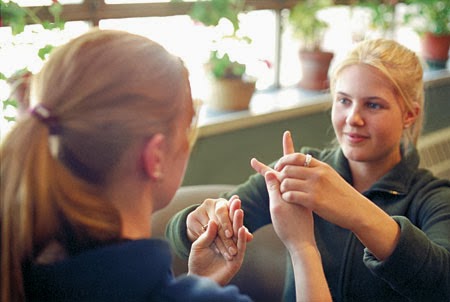
Mwl Rose Yona akiwasiliana na mwanafunzi kiziwi kwa lugha ya alama ktk shule ya viziwi Mwanga mkoani Kilimanjaro.


Mwl Fanuel Mwakanosya akiwa ktk maandalizi ya kufundisha. Anatumia kifaa kiitwacho Perkins, mashine ambayo huweka maandishi ktk mfumo wa nukta nundu.

Mwl Magreth Msuya akitumia Perkins kuandaa nukuu za somo kwa wanafunzi wasioona wa shule ya msingi ya wasioona Buigiri mkoani Dodoma.

Mwl Magreth Msuya akimwezesha mwanafunzi wa darasa la sita somo la hesabu ktk shule ya msingi Buigiri.


Walimu Charles Kibugi (kushoto) na Ernest Ezron (kulia) wakiwa wanawaongoza wanafunzi wa darasa la kwanza kuelekea darasani. Elimu maalum haiishii darasani tu, huenda zaidi kuelekea shughuli zingine ktk maisha. Humwezesha mwalimu na yeyote mwenye kusoma taaluma ya elimu maalum kupata saikolojia ya kuweza kushirikiana na makundi anuai yaliyoko kwenye jamii zetu. Inawezesha mtu kupata stadi za maisha ya kila namna, uvumilivu, upendo na wakati mwingine kufanya kazi kwa kujitolea.

Hawa ni walimu waliokuwa wanafanya mafunzo kwa vitendo kutoka SEKOMU. Walio pamoja nao ni pamoja wakaguzi wa elimu shule za msingi wa kanda na wizarani, walimu wenyeji pamoja na wazee waanzilishi wa shule hiyo miaka ya 1950. Anayeonekana katikati (waliosimama), mwenye shati jeupe na miwani ni mwl mkuu wa shule ya msingi ya wasioona Buigiri, ndugu Sylivanus Hosea. Yeye pia ni mwalimu asiyeona (Blind). Hapa tunaweza kuona kuwa watu wenye ulemavu wana mchango mkubwa kwa maendeleo ya jamii zetu. Pia jamii inaweza kukumbushwa kuwa ulemavu si kukosa uwezo (Disability isn't inability).


Fikiri kijumuishi ~~~ Tenda kijumuishi ~~~ Jenga Taifa jumuishi.

Tuesday, September 17, 2013

Omari Lubuva na mkakati wa kusaidia watu wenye mahitaji maalum

Bwana Omari Lubuva ni mtu asiyeona (blind). Ni mratibu wa TLB (Tanzania League for the Blind) mkoani Dodoma. Anahakikisha kidogo kinachopatikana kutoka kwa wasamalia wema kinawafikia walengwa. Endelea kuangalia matukio katika picha...


Ndg Omari Lubuva akimkabidhi bibi mchele
katika mkoa wa Dodoma eneo la miuji.


Vyakula vikiwa ndani ya mifuko tayari kwa kuwagawia
watu wasioona kwa ajili ya kujikimu kimaisha.


Watu haw wakifurahi baada ya kupewa chakula


Mzee wa miaka zaidi ya 80 ambaye pia haoni
amepata wasaa wa kumshukuru mwezeshaji
kwa kuwapa chakula hicho cha msaada.


Wabibi wawili hapa wakisikiliza kwa makini mgao
unavyokwenda. Wao tayari wameshapata cha kwao


Msoma ratiba ya mgao wa chakula akihakikisha
kama kuna yeyote aliyeachwa kwenye mgao huo

Ndg Lubuva akiwa na msoma ratiba ya mgao na mzee
wao mkongwe akiwasikiliza kwa karibu


Baada ya mgao wa chakula wanajiandaa kuondoka

Wanajamii hawa wanapata muda binafsi wa kumshuku
mwezeshaji wao kwa karibu. Wanaona ni kitu kigeni kwao


Wanaongoza njia kuelekea makwao


Fikiri Kijumuishi ~~~ Tenda kijumuishi ~~~ Jenga taifa Jumuishi


Monday, September 9, 2013

Ifahamu "Buddy Bike"

TEKNOLOJIA JUMUISHI

Hii ni dhana inayojaribu kusisitiza kuwa kunapotokea utengenezaji wa vifaa mbalimbali kwa ajili ya matumizi ya binadamu kwenye jamii yoyote lazima kuwepo na usawa. Hii inamaanisha kuwa watu wenye ulemavu nao wanaweza wakatafutiwa mbinu mbadala ili wasiachwe nyuma na maendeleo ya teknolojia katika maisha.

Leo tuangalie aina hii maarufu ya baiskeli jumuishi iitwayo "BUDDY BIKE".

"BUDDY BIKE" ni aina ya baiskeli yenye viti viwili, staring mbili, pedel mbili na huendeshwa na watu wawili.

Huwa wanapanda watu wawili, mmoja anayeona na mwingine asiyeona (blind). Kazi ya asiyeona ni kupiga pedel na kazi ya anayeona ni kuongoza njia. Aina hii ya baiskeli hutengenezwa nchi za ulaya na zimesambazwa katika nchi nyingi zinazoendelea ikiwemo Tanzania (point of reference being Buigiri School For the Blind in Dodoma). Bahati mbaya baiskeli hizi zikiharibika ni vigumu kupata spea zake.

Ni aina ya baiskeli ambayo waumini wa jamii jumuishi wanaamini inaweza kurejesha heshima na ubinadamu kwa watu wasioona (blind people).

Angalia picha mbalimali za baiskeli hii hapa chini...


Fikiri Kijumuishi ~~~ Tenda Kijumuishi ~~~ Jenga Taifa Jumuishi.

Saturday, August 31, 2013

UNGEJISIKIAJE KAMA UNGEKUWA MWENYE ULEMAVU?


"Ungejisikiaje kama wewe ungekuwa mtu mwenye ulemavu halafu wenzako wakakuona hufai kuishi, hufai kupata elimu, huna hadhi ya kula nao chakula, huna hadhi ya kuongozana nao na pia wakaona huna hata sifa ya kupata mwenzi wa kuishi naye kutokana na ulemavu ulio nao, na hata wakati mwingine unaona mazingira ya kukufanya kitega uchumi kuwa utolewe viungo vyako au uwe kafara kwa jamii????".

Tujifunze nyakati zote kwa faida, wakati wa kutosheka na wakati wa kupungukiwa, wakati wa kushiba na wakati wa njaa, wakati wa kuwa jangwani na wakati wa kujilaza kwenye mito ya baraka.


Pichani juu ni wanafunzi wa darasa la saba mwaka 2012 wa shule ya viziwi ya Mwanga wakiimba wimbo wa kuwaaga wenzao kwa kutumia lugha ya alama. Kwa hakika, lugha ya alama imepunguza athari zitokanazo na ulemavu wa kutosikia (ukiziwi). Tunatakiwa kuwa na msimamo chanya juu ya watu wenye ulemavu kwa kujifunza na kuiendeleza lugha hii ya alama ili kujenga taifa jumuishi.


Binadamu ni kiumbe mwenye utashi, pia ni miongoni mwa wanyama wenye hulka ya kuambatana kimakundi. Binadamu anafundishika na anaweza akaumbika na kuumbiwa taaluma yeyote ile. Pia huyu binadamu anaweza umbiwa tabia zisizoridhisha kwenye jamii, lakini yote haya, yawe mazuri au mabaya mtu anahesabika kuwa anaweza akajifunza kitu kwa ajili yake mwenyewe na jamii kwa ujumla.

Watu wenye ulemavu na/au mahitaji maalum wanaweza wakajifunza kitu chochote kwenye jamii pale wanapokuwa wamewekewa misingi yote yenye kuwafaa na kuwawezesha binadamu. Mara nyingi haya hayawezi kuonekana sana mahali ambpo hakuna watu wengi wenye mahitaji maalum. Ukitaka kuona haya tembelea maeneo yenye shule za watu wenye mahitaji maalum, watoto viziwi wanafanya shughuli zote za kijamii na kiuchumi, watoto wasioona wanawajibika sawasawa na mtu mwingine yeyote kwenye jamii. Watoto wasioona wanaweza kucheza mpira wa miguu, wanaweza kupika chakula bila kusaidiwa, wanatumia simu na kompyuta pamoja na vifaa vingine vya kielektroniki kama wafanyavyo wengine.

Kwa miaka mingi sasa tumekosa sana utaalam na weledi kutoka  kwa watu wenye mahitaji maalum. Nilishangaa kuona mtu asiyeona anaweza kukariri namba za simu zaidi ya 300, anaweza akafundisha darasani kama mwalimu kupita walimu wengine, anaweza kuongoza familia yake na taasisi kuzidi huyu tunayemwita hana ulemavu, anaweza akawa na uchumi mzuri kupita wengine. Pia nimeona wasomi wengi wa uhakika tofauti na wengine wanaoghushi vyeti vya taaluma, wana mchango mzuri wa kimawazo hata zaidi viongozi wengine ambao tunaamini wamebobea kiuongozi.

Ni wakati mzuri sasa kwa watu wote kujenga tabia ya kuthaminiana kama binadamu. Kwa kufanya hivi itasaidia hata inapotokea mtu amepata ulemavu ukubwani aweze kumudu maisha mwenyewe, kwa wazazi ambao wanaweza wakazaa mtoto mwenye ulemavu waweze kuwa na utaalam wa kumlea mtoto wao kwa misingi ya kibinadamu.

Ukweli ni kwamba, binadamu yeyote yule lazima ana ulemavu ambao waweza kuwa mdogo sana, wa kujificha, wa kuonekana, unaoonyesha athari kwenye maisha yake au usioonyesha athari kwenye maisha. Upo usemi unaosema "ukimcheka kilema yawezekana na wewe ukazaa mtoto mlemavu au wewe mwenyewe ukapata ulemavu". Pia ipo methali isemayo "Hujafa hujaumbika" ikimaanisha, madam bado unaishi-unaweza ukapata ulemavu wa aina yoyote ile.

Kwa taarifa tu, ni kwamba kasi ya kuongezeka ulemavu kwa sasa ni kubwa kuliko hapo zamani. Mfano, ni watoto wangapi wanaanza kuvaa miwani wakiwa darasa la tatu hadi la saba? Ni ajali ngapi za gari na pikipiki zinatokea kwenye jamii zetu? Ni shehena ngapi za vyakula kutoka nje vikiwa na sumu ya kuharibu seli za binadamu? Ni watoto wangapi waanaharibiwa ubongo na madaktari wakati wa kuzaliwa? Ni watu wangapi wanaugua malaria sugu na kuharibu ufahamu wao ambao tumezoea kuwaita vichaa? Ni mara ngapi umeona mtu ana msongo wa mawazo ambao unampelekea kuharibu mfumo wa ubongo wake? Ni kesi ngapi unasikia eti mzazi amempiga mwanae kwenye masikio na kumsababishia ukiziwi?

Tuungane kujifunza mambo yote yanayohitajika kumsaidia mtu mwenye ulemavu, tupate ufahamu juu ya hatari zinazoweza pelekea mtu kupata ulemavu, tujifunze kuwashirikisha watu wenye ulemavu ili nasi ikitokea bahati nzuri tukapata ulemavu nasi tusaidiwe na kushirikishwa kama binadamu wengine. Mbali na haya, tujifunze mapito ya milima na mabonde ambayo watu wenye ulemavu hupitia ambayo asilimia kubwa husababishwa na sisi tunaojiita hatuna ulemavu.


              Fikiri Kijumuishi ~~~ Tenda Kijumuishi ~~~ Jenga Taifa Jumuishi